
Ayurvedic Pregnancy Care (Garbhini Paricharya)
Pregnancy is one of the most important phases in a woman’s life. According to Ayurveda, pregnancy care (Garbhini Paricharya) is not limited to physical health alone—it also focuses on mental, emotional, and spiritual well-being. A balanced diet, healthy lifestyle, proper sleep, yoga, meditation, and regular prenatal care help support both the mother and the growing baby.
At Mātritva Naturally, we combine authentic Ayurvedic wisdom with modern prenatal guidance to provide safe, evidence-informed pregnancy care. Every recommendation is personalized according to the mother's Prakriti (body constitution), trimester, digestive strength, and overall health. Our Ayurvedic care is always intended to complement—not replace—regular obstetric care.
Ayurvedic Pregnancy Care/Garbhini Paricharya
Ayurveda emphasizes nurturing both mother and baby throughout pregnancy.
Principles of Garbhini Paricharya
- Individualized Diet (Ahara)
- Healthy Lifestyle (Vihara)
- Mental and Emotional Well-being (Satvavajaya)
- Gentle Exercise

Garbhini Paricharya
Life style of Garbhini includes
Individualized Diet(Ahara)
Ayurveda emphasizes easily digestible, fresh, and nourishing foods.
A balanced diet should also meet modern nutritional recommendations for protein, iron, calcium, folate, and other essential nutrients.
Healthy Lifestyle (Vihara)
- Get adequate sleep and rest.
- Take gentle walks as advised by your healthcare provider.
- Wear comfortable clothing.
- Avoid smoking, alcohol, and recreational drugs.
- Limit excessive physical exertion and heavy lifting.
Mental and Emotional Well-being (Satvavajaya)
Ayurveda recognizes the importance of mental wellness during pregnancy.
- Meditation and mindfulness.
- Gentle breathing exercises (under guidance).
- Listening to calming music.
- Reading positive and uplifting literature.
Gentle Exercise
If approved by the obstetrician:
- Prenatal yoga.
- Stretching exercises.
- Walking.
- Pelvic floor exercises.
Exercise should always be tailored to the individual’s pregnancy and medical condition.
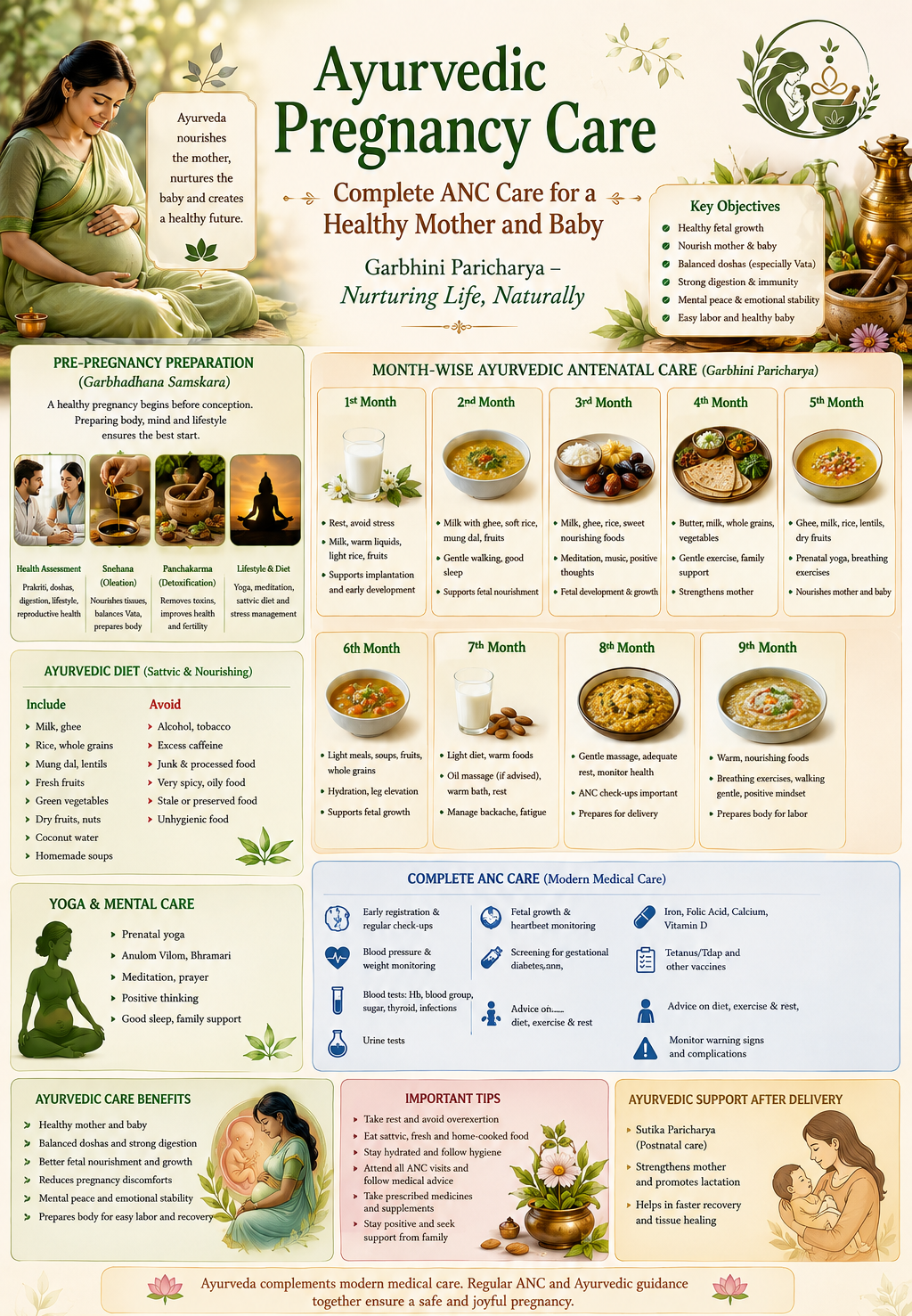
Monthly Ayurvedic Pregnancy Care
| Month | Primary Focus |
|---|---|
| Month 1 | Implantation support, hydration, rest |
| Month 2 | Gentle nourishment and digestion |
| Month 3 | Healthy fetal development |
| Month 4 | Maternal strength and balanced nutrition |
| Month 5 | Tissue nourishment and fetal growth |
| Month 6 | Bone and muscle support |
| Month 7 | Physical comfort and mobility |
| Month 8 | Preparation for childbirth |
| Month 9 | Relaxation, labor preparation, and emotional well-being |
Ayurvedic Support for Common Pregnancy Discomforts.
Under the guidance of a qualified Ayurvedic physician, supportive care may help with: Nausea and morning sickness. Indigestion and bloating. Constipation. Back discomfort. Leg cramps. Fatigue. Sleep disturbances. Persistent or severe symptoms should always be evaluated by an obstetric healthcare professional.
Antenatal Care (ANC)
Ayurvedic pregnancy care works best alongside routine medical antenatal care, including:
- Regular prenatal check-ups.
- Blood pressure monitoring.
- Blood and urine investigations.
- Ultrasound examinations when recommended.
- Screening for gestational diabetes and anemia.
- Vaccinations recommended during pregnancy.
- Nutritional supplementation prescribed by the obstetrician.
When to Seek Immediate Medical Care
Contact your healthcare provider immediately if you experience:
- Vaginal bleeding.
- Leakage of fluid.
- Severe abdominal pain.
- Persistent severe headache.
- Blurred vision.
- High fever.
- Reduced fetal movements (after they are expected to be felt).
- Severe swelling of the face or hands.
Frequently Asked Questions.
Ayurvedic antenatal care, also known as Garbhini Paricharya, is a traditional approach to supporting maternal health during pregnancy. It focuses on balanced nutrition, healthy lifestyle habits, gentle yoga (when appropriate), stress management, adequate rest, and monthly dietary recommendations described in Ayurvedic classics. It is intended to complement routine prenatal care provided by your obstetrician and should not replace medical check-ups.
Ayurvedic lifestyle and dietary recommendations can safely support a healthy pregnancy. However, not every herb, therapy, or Panchakarma procedure is suitable during pregnancy. Self-medication and herbal supplements should always be avoided without professional guidance.
Ayurveda may offer individualized dietary advice and safe lifestyle modifications that can help improve comfort from nausea during early pregnancy. Any herbal remedies should only be used after consultation with both an Ayurvedic physician and your obstetrician.
Ayurveda emphasizes emotional balance through:
- Meditation
- Gentle breathing exercises
- Relaxation techniques
- Positive thinking
- Reading inspiring literature
- Adequate sleep
- Family support
These practices may help promote emotional well-being during pregnancy.