Ayurvedic Goals During the Postpartum Period
1. Restore Vata Balance
According to Ayurveda, childbirth naturally increases Vata Dosha due to blood loss, fluid loss, physical exertion, and empty space created after delivery.
Traditional approaches include:
- Warm oil massage (Abhyanga)
- Warm, freshly prepared meals
- Adequate rest
- Gentle movement after medical clearance
- Avoidance of excessive cold exposure
2. Improve Digestion (Agni)
Digestive strength is often reduced after childbirth.
Ayurveda recommends:
- Warm water throughout the day
- Light, freshly cooked meals
- Easily digestible foods
- Small, frequent meals
- Avoiding processed and heavy foods initially
A healthy digestive system supports nutrient absorption and overall recovery.
3. Rebuild Strength
The body requires additional nutrients after childbirth.
Important nutrients include:
- Protein
- Iron
- Calcium
- Vitamin D
- Vitamin B12
- Healthy fats
- Fiber
- Adequate hydration
These nutritional needs should be met through balanced meals and supplements when recommended by a healthcare provider.
Ayurvedic Diet After Delivery


Ayurveda traditionally recommends warm, nourishing foods that are easy to digest.
Foods commonly recommended
- Moong dal khichdi
- Rice with ghee
- Vegetable soups
- Moong dal soup
- Whole wheat preparations
- Warm milk (if tolerated)
- Dates
- Dry fruits in moderation
- Seasonal cooked vegetables
- Fresh fruits as tolerated
Spices traditionally used
- Cumin
- Fennel
- Ajwain (carom seeds)
- Dry ginger
- Turmeric
- Black pepper (in moderation)
- Coriander
These spices are traditionally believed to support digestion and postpartum recovery.
Hydration
Adequate hydration is essential for:
- Breast milk production
- Recovery
- Digestion
- Prevention of constipation
Recommended fluids include:
- Warm water
- Herbal infusions traditionally used after delivery
- Soups
- Coconut water (if medically appropriate)
Ayurvedic Oil Massage (Abhyanga)
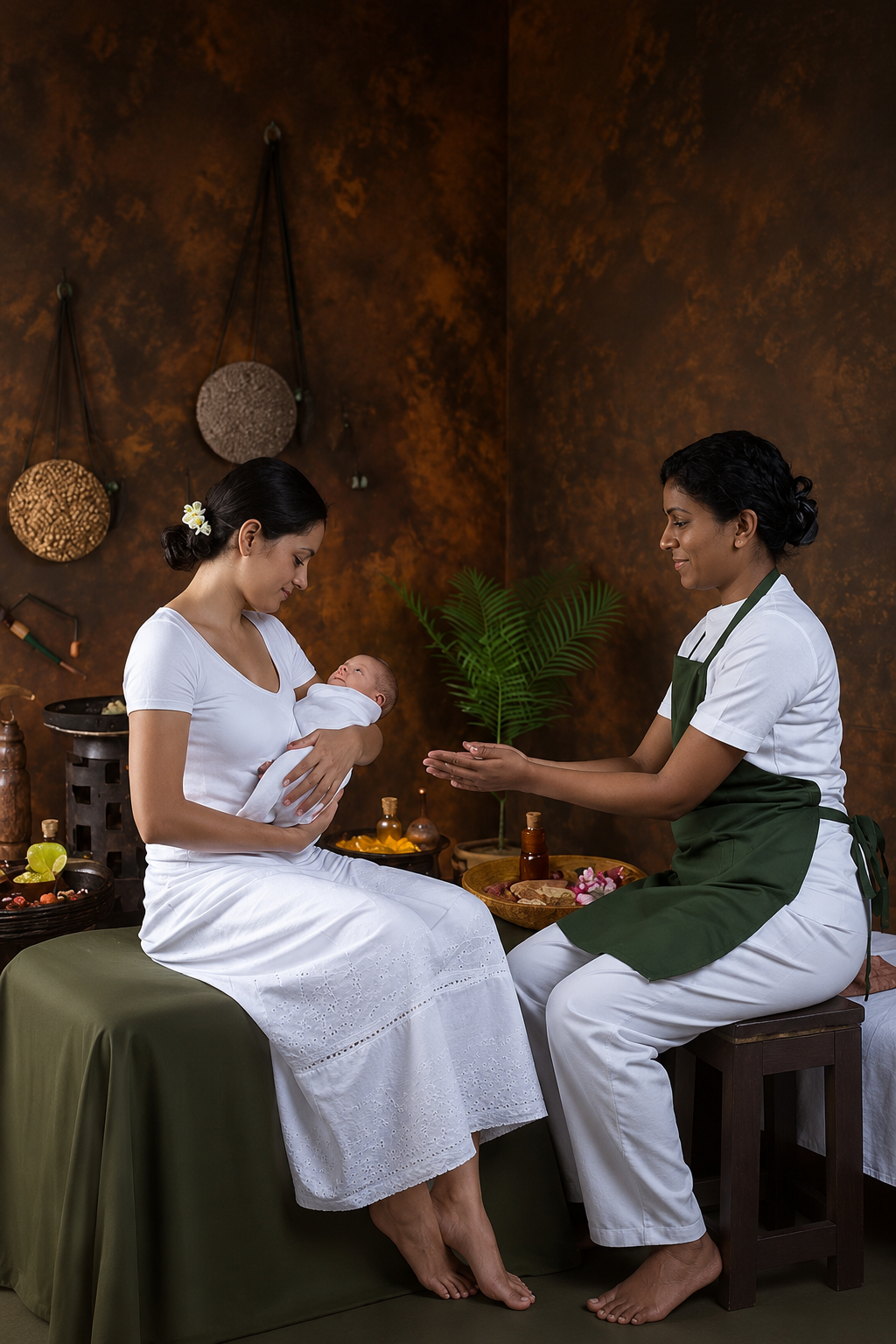
One of the most valued postpartum practices is Abhyanga, or warm herbal oil massage.
Potential benefits include:
- Relaxation
- Reduced muscle stiffness
- Improved circulation
- Better sleep
- Skin nourishment
- Support for Vata balance
Massage should only begin after approval from the treating obstetrician, especially following cesarean delivery.
Belly Binding
Traditional Ayurvedic postpartum care may include gentle abdominal support or belly binding.
Potential benefits may include:
- Improved comfort
- Back support
- Better posture
- Sense of abdominal support
Belly binding should be performed correctly and avoided if contraindicated by the treating physician.
Breastfeeding Support
Ayurveda encourages exclusive breastfeeding whenever medically possible.
General recommendations include:
- Nutritious meals
- Adequate hydration
- Frequent breastfeeding
- Proper positioning
- Emotional support
- Sufficient rest
Any concerns regarding low milk supply, breast pain, fever, or mastitis should be evaluated promptly by a qualified healthcare professional.
Emotional Health After Delivery
The postpartum period can involve significant emotional changes.
Healthy habits include:
- Adequate sleep whenever possible
- Family support
- Gentle breathing exercises
- Meditation
- Stress reduction
- Open communication with healthcare providers
Persistent sadness, anxiety, hopelessness, difficulty bonding with the baby, or thoughts of self-harm require immediate medical attention, as these may indicate postpartum depression or other mental health conditions.
Gentle Yoga and Breathing Exercises


After medical clearance, gentle activities may include:
- Deep diaphragmatic breathing
- Gentle stretching
- Pelvic floor exercises
- Walking
- Meditation
- Simple postpartum yoga under professional guidance
Avoid strenuous exercise until advised by your healthcare provider.
Ayurvedic Herbs Traditionally Used
Some Ayurvedic herbs are traditionally used to support postpartum recovery, but they should only be taken under the guidance of a qualified Ayurvedic physician, especially while breastfeeding.
Examples include:
- Shatavari
- Ashwagandha
- Bala
- Vidari
- Dashamoola formulations
- Jeerakadi preparations (where appropriate)
Scientific evidence varies for these herbs, and safety depends on individual health conditions and concurrent medications.
Lifestyle Recommendations
- Prioritize adequate rest.
- Sleep whenever the baby sleeps, if possible.
- Eat freshly prepared meals.
- Maintain good personal hygiene.
- Stay hydrated.
- Accept help from family members.
- Attend all postpartum medical check-ups.
- Avoid smoking and alcohol.
- Gradually return to daily activities as advised.
When to Seek Immediate Medical Care
Contact your healthcare provider immediately if you experience:
- Heavy vaginal bleeding
- High fever
- Severe abdominal pain
- Foul-smelling vaginal discharge
- Chest pain or difficulty breathing
- Severe headache or vision changes
- Swelling or pain in one leg
- Difficulty breastfeeding due to pain or infection
- Symptoms of postpartum depression or anxiety



Welcomr to our
complete healing centre through natural way

Natural healing emphasizes the intrinsic connection between mental and physical health. By reducing stress and nurturing the nervous system through therapies like Meditation ,Yoga ,and Herbal medicine.

Booking Now

Gift Packages
Offers & Deals


Type your paragraph here